
The Mark Constantine most people are searching for is Mark Constantine OBE, the British entrepreneur born on 21 July 1952, who co-founded Lush Cosmetics in Poole, England, in 1995. As of the Sunday Times Rich List 2023, he and his wife Mo Constantine have a combined net worth estimated at £350 million, with some industry sources placing the figure as high as £440 million depending on the valuation methodology applied to their stake in Lush. That range, roughly £350 million to £440 million, is the most credible and current estimate you'll find.
Mark Constantine Net Worth: Estimate, Sources, and How It’s Calculated

Daniel Rothstein
22 Jun 2026
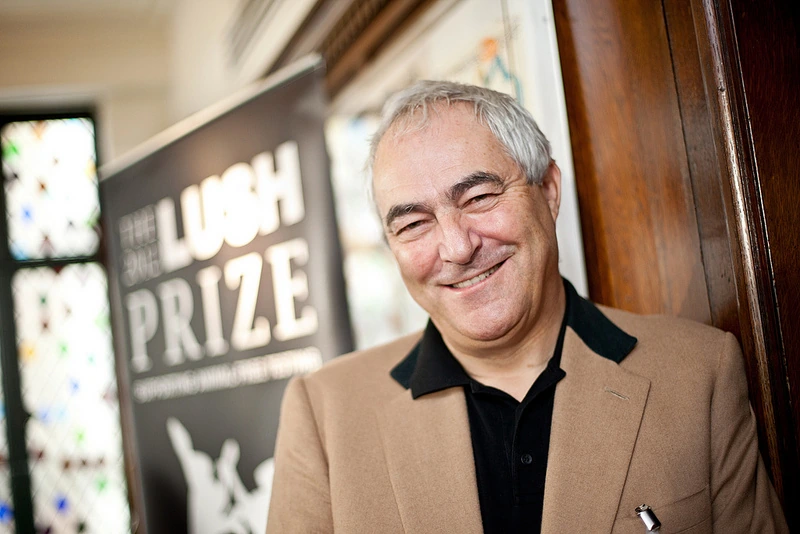
Which Mark Constantine are we talking about?

There are at least three distinct people named Mark Constantine in public records worth knowing about before you go further. Confusing them is easy, and some of the murkier net-worth figures online may actually be mixing them up. A FINRA BrokerCheck individual report for “MARK CONSTANTINE KARRAS” is a disambiguation candidate that can help avoid identity mix-ups blank" rel="noopener noreferrer">mark-misups.
- Mark Constantine (born 1952, UK): The Lush Cosmetics co-founder and CEO. This is almost certainly the person you're looking for. He's the one with the OBE, the Sunday Times Rich List entry, and a backstory involving Anita Roddick and The Body Shop. All the significant wealth figures in circulation refer to this person.
- Mark Constantine Karras: A completely separate individual who appears in FINRA BrokerCheck records as a U.S. financial industry professional. No credible wealth estimates are publicly associated with this person.
- Mark Constantine (actor/entertainment): An IMDb entry exists under this name, suggesting at least one person in the entertainment space carries it. No notable financial profile is attached to this identity in any major outlet.
- A fourth entry: A bio PDF hosted by UNC Greensboro references a Mark Constantine in an academic or community engagement context, again unrelated to the Lush founder.
The rest of this article focuses entirely on Mark Constantine the Lush co-founder. If you stumbled here looking for a different Mark Constantine, the short answer is that no credible public net-worth estimate exists for the other individuals sharing this name. That confusion can include cases like the UNCG-hosted PDF titled “MarkConstantineBio.pdf,” which appears to refer to a different Mark Constantine than the Lush co-founder blank" rel="noopener noreferrer">the UNCG-hosted PDF titled “MarkConstantine_Bio.pdf”.
The most credible net-worth estimate and where it comes from
The Sunday Times Rich List is the closest thing the UK has to an authoritative annual wealth ranking, and its 2023 entry puts Mark and Mo Constantine's combined fortune at £350 million. If you are trying to pin down Mark Constantine's mark crossfield net worth, the Sunday Times Rich List figures are the most widely cited starting point combined fortune at £350 million. That estimate is grounded in Lush's latest published accounts, dividend distributions from the company, and a reference to a recent stake sale that valued Lush at more than £1 billion. Using the implied valuation from that stake sale and the Constantines' known ownership position, the Sunday Times arrived at £350 million. A separate industry source, citing what appears to be a different Rich List year or methodology, places the figure at £440 million. The honest read: the real number sits somewhere in that £350 million to £440 million band, depending on when you're looking and how Lush's private valuation was calculated at the time.
For context, the same Sunday Times Rich List put the couple's wealth at just £50 million back in 2004, as reported by the London Evening Standard at the time. That earlier figure isn't wrong, it just reflects an entirely different era of the business. Lush's global expansion over the subsequent two decades is what drove the dramatic increase.
| Source | Year | Estimated Net Worth | Notes |
|---|---|---|---|
| Sunday Times Rich List (via London Evening Standard) | 2004 | £50 million | Early-stage Lush; reflects pre-global-expansion valuation |
| Sunday Times Rich List (archived) | 2023 | £350 million | References stake sale, dividends, latest accounts |
| CIM / industry trade source | Unclear | £440 million | Cites Sunday Times Rich List; year not confirmed |
| General online aggregators | Varies | Widely inconsistent | Often outdated or unsourced; treat with caution |
How Mark Constantine built and maintained this wealth

Mark Constantine's financial story starts long before Lush. He was homeless at 16, trained as a hairdresser, and gradually moved into developing cosmetic products. His first serious break came through Anita Roddick of The Body Shop, who bought his formulations early in his career, giving him both capital and credibility. That relationship ended with a company that, by his own account, blew up financially, but the experience gave him the product development and commercial knowledge that would eventually become Lush.
When he and Mo co-founded Lush in Poole in 1995, the model was deliberately founder-controlled and largely self-funded through reinvested profits rather than external venture capital. That structure meant the Constantines retained a substantial ownership stake as the company scaled internationally. The wealth isn't primarily from a salary or even a big IPO payday. It comes from equity ownership in a private company that generates significant annual revenues and dividends, combined with at least one partial stake sale that crystallized value without a full exit. If you’re trying to pin down the mark crossley net worth, you’ll get more accuracy by focusing on primary valuation inputs like private-company equity stakes, not quick online guesses equity ownership in a private company.
- Equity ownership in Lush: The primary driver. As co-founder and CEO holding a large stake in a company valued at over £1 billion, the math on Constantine's wealth is essentially: ownership percentage multiplied by enterprise value, adjusted for debt and liabilities.
- Dividends: Lush distributes profits to shareholders, and as a major shareholder, Constantine receives regular dividend income.
- Stake sale proceeds: The Sunday Times Rich List specifically references a recent stake sale as part of the valuation calculation. This means some wealth has already been realized in cash, not just held on paper.
- Product IP and royalties: Constantine is credited as a product inventor and formulator. Intellectual property tied to product development may carry additional value within the company's asset base.
- Earlier Body Shop relationship: Revenue from selling formulations to The Body Shop in the 1980s and early 1990s was an early income driver, though this predates Lush's founding.
Assets, investments, and what to look for
Because Lush is a private company, the full picture of the Constantines' asset base isn't publicly disclosed the way a listed company's would be. That said, there are specific areas where you can find real clues.
The most actionable starting point is Companies House, the UK's public corporate registry. Lush's UK holding entities will have director filings, shareholder registers (to the extent required under UK law), and annual accounts. These accounts won't tell you exactly what Mark Constantine is personally worth, but they will show revenue, profit, dividends paid, and the general financial health of the business that underpins most of his wealth. Lush's UK entity has filed accounts that show the scale of the operation. Look for the parent or holding company structure, not just the retail subsidiary.
Property records are another avenue. UK Land Registry records are publicly searchable, and for high-net-worth individuals, property holdings in England and Wales can be traced. Given that Constantine is based in the UK and his wealth has been substantial for at least two decades, it would be reasonable to expect significant real estate holdings, though specific addresses and values aren't publicly confirmed in the sources available here.
The stake sale referenced in the Sunday Times Rich List is worth investigating further. Any partial sale of equity in a private company of Lush's scale would typically involve disclosed transaction terms in press coverage or regulatory filings, depending on who the buyer was. Searching UK press archives for Lush stake sale or Lush investment round from 2020 onward should surface details about that transaction and what it implied about the Constantines' remaining holding.
Why online net-worth numbers for Mark Constantine conflict

The variance in published figures comes down to a few predictable problems, and once you understand them, the conflicting numbers make more sense. This also helps explain why the mark cross net worth numbers you see online can diverge from primary reporting.
First, Lush is private. In practical terms, the Mark Constantine net worth range you see online is mainly a reflection of which valuation proxy and year each source used net-worth numbers. There is no stock price, no public market cap, and no quarterly earnings release that anchors a definitive valuation. Instead, analysts and journalists use proxies: revenue multiples, comparable company valuations, disclosed dividend levels, or the implied valuation from a stake sale. Different sources use different proxies and different years, which produces different numbers. The £350 million and £440 million figures you see floating around almost certainly reflect different years, different ownership assumptions, or different valuation methodologies applied to the same private company.
Second, the wealth is jointly attributed. Mark and Mo Constantine are consistently listed together in the Sunday Times Rich List. Some aggregator sites may split the figure, attributing the whole amount to Mark alone, which distorts the per-person picture. Others may ignore Mo entirely and still quote the combined total as if it belongs to one person.
Third, aggregator and celebrity net-worth websites rarely cite primary sources, and many pull from older data without updating. The £50 million figure from 2004 still circulates on some sites, sitting alongside the 2023 estimate as if they're equivalent reference points. They're not. Always check the date attached to any net-worth figure you find.
How to verify these figures yourself
If you want to do your own due diligence rather than taking any single source at face value, here's a practical workflow that actually works for a private-company founder like Constantine.
- Start at Companies House (companieshouse.gov.uk). Search for the Lush UK holding company and any related entities with Constantine listed as a director or person of significant control (PSC). The PSC register is especially useful because it discloses ownership thresholds (e.g., 25 percent or more) even for private companies.
- Pull the most recent filed accounts. Look at turnover, operating profit, dividends paid, and retained earnings. This won't give you a personal net worth, but it lets you sanity-check any valuation being applied to the business.
- Search UK press archives (The Times, The Guardian, Financial Times) for the Sunday Times Rich List entry directly. The Rich List methodology note, which the paper publishes each year, explains how estimates for private company owners are constructed. This helps you judge whether the £350 million figure is conservative or aggressive.
- Look for coverage of the stake sale referenced in the 2023 Rich List. Use search terms like 'Lush investment,' 'Lush stake sale,' or 'Lush valuation' with a date filter starting from 2018 onward. Transaction coverage, even partial, will tell you who bought in, at what implied valuation, and how much of the company was sold.
- Check UK Land Registry (search.landregistry.data.gov.uk) for property ownership associated with Constantine's known addresses or business locations. This is publicly available and can surface real estate assets.
- For court records or litigation that might affect net worth, search BAILII (bailii.org) and the Companies Court records. These are less likely to be relevant here but are worth checking if you see unusual claims about the business.
- Cross-reference with credible journalism: the Forbes 2007 profile ('Clean Scrub') and the NPR 'How I Built This' episode are both solid primary sources that document the company's history and Constantine's career trajectory in his own words.
Career milestones that track directly to financial growth
Understanding when and how the wealth accumulated is as useful as knowing the number itself. Constantine's financial story has a few distinct chapters.
The Body Shop years in the 1980s were his first meaningful commercial success. Selling cosmetic formulations to Anita Roddick gave him early revenue and a proof of concept. When that arrangement and the associated company ended badly, it was a financial setback, but not a permanent one.
Lush's founding in 1995 in Poole, Dorset, marks the start of the wealth trajectory that produced the current estimates. The early years were scrappy, but the direct-to-consumer retail model and emphasis on fresh, handmade products with strong ethical positioning resonated with a growing market. Forbes covered the company's expansion in 2007, by which point Lush had already become a meaningful retail presence across multiple markets.
The 2011 OBE in the New Year Honours for services to the beauty industry is a public-record milestone that reflects the company's established status by that point. While an OBE doesn't add pounds to a bank account, it marks the moment when Constantine's commercial success was formally recognized at a national level, roughly 16 years into Lush's existence.
The stake sale referenced in the 2023 Sunday Times Rich List, which implied a Lush valuation exceeding £1 billion, is the most significant single financial event in the public record. It represents partial liquidity for the founders without a full exit, and it anchors the current £350 million to £440 million wealth estimate more concretely than any earlier figure because it reflects an actual transaction rather than a theoretical valuation.
Tracking wealthy business figures named Mark across industries is something this site does extensively. If you're comparing entrepreneurial wealth profiles, the financial journeys of other prominent Marks in business and beyond offer useful context for understanding how founder equity and private company valuations drive net-worth estimates that can look very different from, say, a salary-based career in sport or entertainment.
FAQ
Why do some sites show a much higher or lower “mark constantine net worth” than the Sunday Times figure?
Most “outlier” numbers come from using a different valuation proxy (revenue multiple versus dividend yield versus an assumed ownership percentage) or from applying the same proxy to a different year. With Lush being private, the same underlying stake can produce different wealth estimates depending on which financial year and discount rate the calculator assumes.
Is the Sunday Times Rich List estimate meant for Mark alone, or Mark and Mo together?
It is reported as a combined wealth figure for Mark and Mo Constantine. If a calculator website splits the total into two “per person” amounts, it can be misleading, because private-company equity and assets may not be held or valued identically across the couple.
How can I tell whether a “Mark Constantine” net worth post is mixing up different people with the same name?
Check the biography clues used in the post. If it mentions Lush, the UK cosmetics founder background, or the OBE, it is likely the correct individual. If it includes unrelated industries, different birth years, or no UK corporate footprint in Lush entities, treat it as unreliable.
Can I estimate Mark Constantine’s net worth more accurately using Companies House than from random website figures?
You can improve accuracy, but you usually still cannot get a personal net-worth statement. What you can do is triangulate the business value driver, such as dividends paid and profitability, from annual accounts for Lush’s UK holding entities, then relate that to ownership and the implied valuation from any disclosed equity transaction.
What is the biggest “gotcha” when converting a private-company stake value into a personal net worth number?
Personal net worth is not just “company value times percentage.” You have to consider whether the stake is held through multiple entities, whether there are preferential rights or different share classes, and whether any portion of the wealth is tied up in illiquid holdings rather than cash. Many web estimates ignore these structure details.
Does a partial stake sale automatically mean the founders cashed out and are now richer?
Not necessarily. A partial sale can crystallize value, but it may be structured for liquidity while leaving the majority of the equity in place. The sale terms, remaining ownership, and any reinvestment matter, which is why the same transaction can lead to different net-worth interpretations.
Why does the estimate change even if nothing “big” happened recently?
Because the valuation proxy moves. If a later source uses a different financial year, updates the implied private-company valuation from press disclosures, or applies a new multiple to Lush’s current performance, the inferred equity value changes. With private companies there is no single market price to anchor everything.
Should I use property records to validate the net-worth number directly?
Property records can help with plausibility, but they rarely let you confirm total net worth. A property listing might reveal holdings in England and Wales, yet it does not show the full balance sheet (other assets, liabilities, trust structures), and it does not confirm how much equity is actually attributable to Mark versus jointly held arrangements.
What if I see “Mark Constantine net worth” presented as a single static number, with no year attached?
Treat it as lower quality. Net-worth estimates for private entrepreneurs should specify a reference date (often the Rich List year) and the valuation method. A number without a date is commonly an older estimate that has been republished unchanged.
Next Article
Mark Lovette Net Worth: Current Estimate & Financial Bio
Mark Lovette net worth: estimated value, sources, income breakdown, assets, timeline & confidence range.