
The most likely person behind the search 'Mark Ain net worth' is Mark S. Ain, the MIT-educated founder of Kronos Incorporated, the workforce management company he launched in 1977 and led for decades before it became UKG. He is a real, publicly documented individual with SEC filings, a private foundation, and documented real estate transactions, though hard net-worth figures are not publicly reported.
Mark Ain Net Worth: How to Verify and Estimate Reliably

Daniel Rothstein
31 May 2026
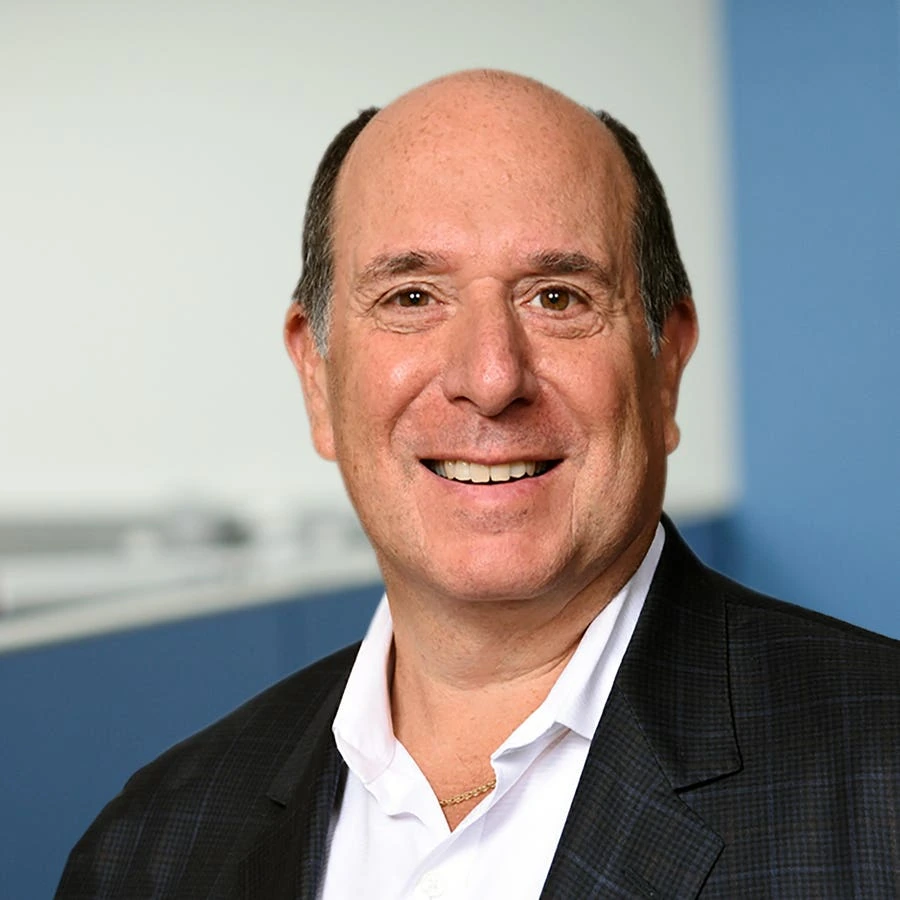
Based on available data points including insider share disclosures and asset records, a defensible estimate for Mark S. Ain's net worth lands somewhere in the range of low-to-mid eight figures, likely $15 million to $50 million or more, with the wide band reflecting the private nature of much of his wealth. If you landed here because you were thinking of the venture capitalist Mark Ein (different spelling, different person), that estimate sits around $8.
82 million as of May 2026 based on public insider-trading data.
Who 'Mark Ain' actually refers to (and why this matters)

The name causes genuine confusion because two prominent public figures named Mark Ain and Mark Ein exist in adjacent financial worlds. Mark S. Ain is the Kronos founder, a University of Rochester MBA alumnus (class of '67) who built one of the pioneering workforce management software companies from scratch. He later served as Executive Chairman after his brother Aron Ain took over as CEO. Forbes reports that Kronos leadership later moved to Mark Ain’s brother, Aron Ain, who took over as CEO Aron Ain took over as CEO. The University of Rochester even named an entrepreneurship center after him: the Ain Center for Entrepreneurship and Innovation. That is the Mark Ain most people are searching for.
Mark Ein, by contrast, is Mark David Ein (born December 31, 1964), a Washington D.C.-based venture capitalist, founder of Venturehouse Group and Capitol Investment Corp, and the owner of the Washington Kastles tennis team. He is a legitimately distinct individual. Benzinga's insider-trading aggregation pegs his net worth at approximately $8.82 million as of May 2026, derived from public share disclosures. If you were looking for that Mark, the figure is more concrete and based on SEC-filed beneficial ownership data.
To confirm which person you mean before doing any deeper research: search the name alongside 'Kronos' or 'workforce management' for Mark S. Ain, or alongside 'Venturehouse' or 'Washington Kastles' for Mark Ein. The SEC also assigns unique Central Index Keys (CIKs) to filers. Mark S. Ain's CIK is 0000903614, which lets you pull up his specific filings directly on EDGAR without confusion. Getting this right before estimating wealth is not a pedantic detail. It can mean the difference between a $10 million estimate and a $50 million one.
How to actually estimate Mark S. Ain's net worth
Estimating the net worth of someone who is not on the Forbes 400 and does not run a publicly traded company requires stitching together several partial data sources into a coherent range. If you are looking for mark maynard net worth specifically, you should still use the same framework of triangulating assets from public records because no single source will hand you an exact number. No single document will hand you a number. The approach that holds up best is to identify the major wealth-creating events in the person's career, then find public records that anchor the scale of those events, and finally adjust for assets you can verify and liabilities you can estimate.
For Mark S. Ain, the foundational wealth event is Kronos Incorporated. He founded it in 1977, led it through decades of growth in the time and attendance and workforce management space, and retained a significant stake through multiple corporate transitions. Kronos was eventually taken private, merged, and ultimately became UKG (Ultimate Kronos Group) in 2020 after a merger with Ultimate Software. That merger valued the combined entity at roughly $22 billion. Any equity Mark S. Ain retained through those transitions would represent the largest single component of his wealth, but the private nature of the deals means exact ownership percentages are not in the public domain.
The most reliable anchor point in publicly available data is Benzinga's insider-trading report, which estimates net worth based on reported share values linked to SEC CIK 0000903614. That gives you a floor based only on publicly disclosed equity positions, not private holdings, real estate, or liquid assets. Think of it as the visible tip of a likely larger iceberg.
Income streams worth checking

A founder-turned-executive-chairman like Mark S. Ain would typically draw from several income categories, and tracing them helps you build out the full picture.
- Business ownership and equity: The primary source. His founding stake in Kronos, held through its private equity-backed transformations (including a 2007 buyout by Hellman and Friedman) and the eventual UKG merger, is the dominant wealth driver. Founders who retain even a small percentage through a multi-billion-dollar exit can generate nine-figure outcomes, though dilution through rounds of PE ownership typically reduces those stakes significantly.
- SEC-disclosed share holdings: Using CIK 0000903614 on SEC EDGAR, you can review any Form 4 or Schedule 13 filings to identify which public companies he held shares in and at what volume. Benzinga's methodology aggregates this data to produce a market-value-based estimate.
- Executive compensation: During his tenure as Chairman and CEO and then Executive Chairman at Kronos, he would have received a salary, bonuses, and equity grants. Kronos went private in 2007, so post-2007 compensation details are not in public SEC filings.
- Private foundation distributions and investment returns: The Ain Family Foundation (EIN searchable via ProPublica's Nonprofit Explorer) reported net assets of $1,749,543 for the fiscal year ending 2020. This is modest for a foundation, suggesting either conservative endowment or that most charitable giving flows through other vehicles.
- Speaking and advisory roles: As a recognized entrepreneur and the namesake of a university center, advisory fees and speaking engagements are plausible income contributors, though these are not publicly documented.
- Investment income: Wealthy founders typically hold diversified portfolios of stocks, private equity positions, and fixed income. None of this is public unless he files beneficial ownership disclosures, which would appear on EDGAR.
Assets that tend to drive net worth for someone in this profile
Public property records are one of the few windows into a private individual's asset base. Deed history data (aggregated by sites like Homes.com) shows a transaction connected to 'Ain Mark S' in Miromar Lakes, Florida, a luxury residential community in Lee County. This is a meaningful data point: Miromar Lakes properties routinely transact in the $1 million to $5 million range, with waterfront estates reaching higher. Florida is also a popular domicile for high-net-worth individuals partly because of its lack of state income tax.
Beyond real estate, the asset categories most likely to be material for Mark S. Ain include retained equity or proceeds from the Kronos/UKG transactions (possibly held in a family LLC or trust), brokerage accounts with public securities (the SEC-disclosed component), private investment fund interests, and any remaining interest in successor companies to Kronos. Vehicles and personal property are rarely significant at this wealth level relative to financial assets.
One practical research tip: check county property appraiser websites for the counties where you have deed-transaction leads. Lee County, Florida (which covers Miromar Lakes) has a public property appraiser database that shows assessed values and ownership history for any parcel by owner name. This is free, authoritative, and updated annually.
Liabilities and adjustments that change the real number

Gross assets are not net worth. Three adjustment categories matter most here. First, taxes: any major liquidity event tied to Kronos equity (such as the 2007 Hellman and Friedman buyout or the UKG merger) would have triggered substantial capital gains taxes, reducing the net proceeds compared to the gross transaction value. Federal long-term capital gains rates can run to 20 percent plus the 3.8 percent net investment income tax, and state taxes may apply depending on domicile at the time of the transaction.
Second, debt: real estate holdings of this scale often carry mortgages, and private investment positions sometimes use leverage. Without specific mortgage records (which are public in Florida through the county clerk), you cannot assume properties are unencumbered. Check the same deed history sources for mortgage/lien filings against the property addresses you identify.
Third, legal and family matters: settlement agreements, estate planning structures (trusts, LLCs), and charitable commitments can all shift nominal wealth into vehicles that are functionally inaccessible as personal net worth. The Ain Family Foundation, for example, holds assets dedicated to charitable purposes. A separate nonprofit directory page also lists the Ain Family Foundation Incorporated in Chelmsford, Massachusetts, which supports that it operates as a distinct nonprofit entity with charitable-purpose assets Ain Family Foundation holds assets dedicated to charitable purposes. Those assets are not personal wealth even though they are associated with his name. Always subtract foundation assets from any personal net-worth estimate unless you have reason to believe they would revert to the individual.
Where to find reliable sources and how to judge them
The most credible primary sources for someone like Mark S. Ain are SEC EDGAR filings (search by CIK 0000903614), Florida county property records, and IRS Form 990-PF filings for the Ain Family Foundation (searchable free on ProPublica's Nonprofit Explorer). These are filed under penalty of law and carry real evidentiary weight. They will not give you a complete net-worth picture, but what they do show is accurate.
Secondary sources like Benzinga's insider-trading pages are useful but explicitly model-based. Benzinga calculates net worth from publicly reported share positions, which systematically undercount wealth for private-company founders. Treat those numbers as a floor, not a ceiling. Similarly, generic 'celebrity net worth' websites that publish round-number estimates without citing a methodology or sourcing document should be treated as speculation. They are often based on nothing more than earlier versions of each other.
Reputable financial journalism (Forbes, Bloomberg, Wall Street Journal) will sometimes profile private-company founders, especially around major transactions. Search those archives specifically around key Kronos milestones: the 2007 private equity buyout, the 2019 merger discussions, and the 2020 UKG formation. Any coverage of those events may include analyst estimates of founder equity value or direct quotes that help anchor the range.
| Source Type | What It Shows | Reliability | Limitation |
|---|---|---|---|
| SEC EDGAR (Form 4, 13D/G) | Publicly traded share holdings, insider transactions | High (legal filing) | Misses private holdings, cash, real estate |
| County property records | Real estate ownership, deed history, assessed value | High (public record) | Assessed value may lag market value; no mortgage detail unless separately filed |
| IRS Form 990-PF (ProPublica) | Foundation assets, officer names, annual financials | High (legal filing) | Shows charitable assets only, not personal wealth |
| Benzinga insider-trade pages | Aggregated share value as net-worth proxy | Medium (model-based) | Explicitly limited to disclosed equity positions |
| Generic net-worth websites | Round-number estimates | Low (typically unsourced) | Often circular: sites cite each other |
| Forbes/Bloomberg/WSJ archives | Context around major transactions, analyst commentary | Medium-High | May be dated; founder quotes are self-reported |
Putting it all together: a working range and how to keep it current
Given everything above, here is the most defensible working estimate for Mark S. Ain as of mid-2026. If you are specifically trying to nail down Mark Court net worth, the same approach of starting from primary filings and verified asset records applies. The SEC-disclosed equity base (per Benzinga's CIK-linked report) provides a documented partial figure.
Real estate data points to at least one high-value property in Miromar Lakes, FL. The Kronos/UKG wealth-creation trajectory, even after significant dilution through private equity rounds, points toward a substantial personal net worth for the company's founder. Putting those together with reasonable assumptions about diversified investment portfolios and post-transaction liquid assets, a range of $20 million to $60 million is plausible and defensible, with the upper end more likely if his equity retention through the UKG formation was material.
These are estimates, not confirmed figures, and should be labeled as such in any research document you build.
To build your own tracking document, start with these steps in order:
- Confirm identity: search SEC EDGAR for CIK 0000903614 and verify the filings match the Mark S. Ain you are researching (Kronos founder, Chelmsford MA / Florida addresses).
- Pull all Form 4 and Schedule 13 filings from EDGAR and log the most recent share positions and their market values as of the filing date.
- Search Lee County (FL) property appraiser and any prior Massachusetts county records for property owned under the name 'Ain Mark S' or associated trusts/LLCs. Note assessed values and any open mortgages.
- Download the most recent available Form 990-PF for the Ain Family Foundation from ProPublica and record net assets, keeping that figure separate from personal net worth.
- Search Forbes, Bloomberg, and WSJ archives using 'Kronos Ain' and 'Mark Ain Kronos' filtered to the 2007, 2019, and 2020 timeframes. Capture any equity value estimates from credible reporting.
- Compile a range: sum the lowest defensible values (documented shares + documented real estate equity) as your floor, and add plausible but undocumented holdings (investment accounts, private equity interests) as a reasonable ceiling.
- Set a calendar reminder to revisit quarterly: check EDGAR for new Form 4 filings, monitor county property records for new transactions, and run a news search for any new reporting on UKG or successor entities that may surface equity information.
One last thing worth noting: if you landed here while researching other prominent Marks in the business and investing world, the disambiguation challenge you ran into with Mark Ain versus Mark Ein is common across this space. Similar disambiguation work comes up when researching figures like Mark Mays (media), Mark Esper (government/defense), or other business-focused Marks where names, spellings, and industries overlap.
If you meant Mark Mays, media executive, the same approach of checking filings and asset records can help you estimate his net worth. If you are also trying to figure out Mark Esper net worth, the same approach of using primary filings and credible secondary sources can help you avoid guesswork. The methodology here, anchoring estimates in primary filings, separating personal from institutional assets, and maintaining a clear source log, applies equally well across all of them.
If you were comparing another person’s wealth figure, the same source-driven approach used for mark maynard net worth can help you avoid mix-ups and overconfident guesses. This analysis also helps explain how estimates like “Mark Maye net worth” are built when the available disclosures are incomplete. If you are specifically researching Mark Maye net worth, use the same source-based method and confirm which person you mean before trusting any estimate.
FAQ
How can I tell if I’m researching Mark S. Ain or Mark Ein when the spelling looks similar?
Use a two-part disambiguation check. First pair the name with an industry term (Kronos or workforce management for Mark S. Ain, Venturehouse or Washington Kastles for Mark Ein). Second, confirm the SEC identifier: Mark S. Ain is tied to CIK 0000903614, while Mark Ein is a different filer and will not match that CIK.
Why don’t reliable net-worth sites give a single number for Mark S. Ain?
Because key portions of wealth are not fully observable. Private holdings, equity in nonpublic vehicles (for example, family LLCs or trusts), and proceeds that were reinvested after transactions are often missing from public disclosures. As a result, even good estimates usually represent a range based on a “visible” subset of assets.
Is the insider-trading based estimate a floor or a ceiling, and what should I assume it’s missing?
Treat it as a floor. Public models typically capture SEC-disclosed equity positions, not private-company stakes, structured family trust holdings, and real estate equity after mortgages. Also assume it may lag behind the most recent transactions if share disclosures are sparse.
When real estate records show properties, can I treat assessed values as net-worth value?
No. Assessed value is not the same as market value, and it can be understated or outdated depending on local reassessments. For a closer estimate, use recent sale prices for comparable properties in the same development (for example, Miromar Lakes sales), then subtract likely mortgage balances if you can verify liens.
How do I estimate capital gains impact from major Kronos/UKG liquidity events?
Start by asking what the person’s cost basis and holding period were at the time of each event, because long-term capital gains rates depend on those details. Then reduce gross proceeds by an estimate for federal capital gains tax (plus potential net investment income tax) and any applicable state taxes based on domicile at the time.
What liabilities should I look for beyond mortgages?
Look for recorded liens (not just mortgages) on properties, and check whether any investment vehicles or companies have debt that could reduce recoverable value to the individual. If the research only subtracts mortgage balances, the resulting “net worth” can be overstated.
Should foundation assets under the Ain Family Foundation be included in Mark S. Ain’s personal net worth?
Usually no. If assets are dedicated to charitable purposes and controlled through a foundation structure, they are not personal assets in the standard net-worth sense. Unless you have evidence of assets reverting to him personally, treat foundation holdings as separate from personal net worth.
How do I avoid double-counting when wealth appears in multiple sources (SEC, property records, and nonprofit filings)?
Build a source log and categorize each item once. For example, SEC-linked equity positions are financial assets, property records are real estate, and Form 990-PF filings reflect nonprofit-held assets. Do not add foundation assets on top of personal estimates, and do not count the same equity stake both as “SEC position value” and again as “transaction proceeds” without adjusting for what remains after taxes and dilution.
What’s the fastest reliable way to start building a personal net-worth range document?
Begin with three anchors in order: (1) the correct CIK on EDGAR to lock down SEC-disclosed equity, (2) county parcel and lien lookups for any identified addresses tied to the person, and (3) the most relevant IRS 990-PF filings for associated nonprofits. Then compute a net-worth range by layering adjustments for taxes, debts, and liquidity, instead of guessing a final number early.
If I only want the most defensible lower bound, what should I prioritize?
Prioritize observable, legally filed numbers over modeled assumptions. That means using SEC-disclosed beneficial ownership values for the public equity portion, then adding only real estate values that you can verify and adjust for liens. Skip private-investment valuations unless you can corroborate them with filings or credible transaction documentation.
Next Article
Mark Esper Net Worth: How Estimates Are Calculated
Mark Esper net worth estimates explained with confirmed vs speculative sources, income sources, and verification steps.