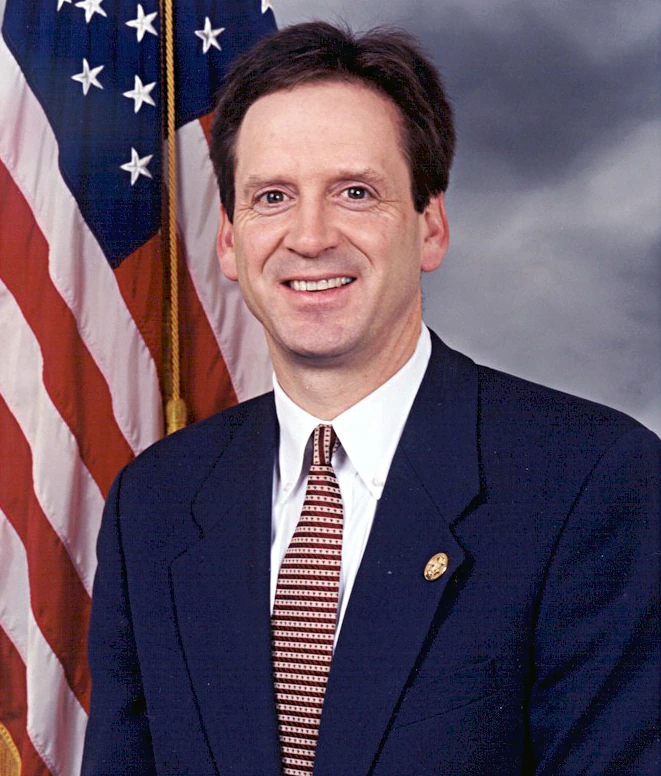
There is no single, verified public net worth figure for Mark Gruner. The most widely circulated estimate, around $24.6 million for 2026, comes from People AI and appears to be tied to Mark Gruner the actor (born December 29, 1958), best known for appearing in Jaws 2 (1978). But at least three other distinct people share this name, including a CPA and CFO working in Canadian nonprofit finance, a former HP Enterprise Services professional in Georgia, and a business consultant based in the Netherlands. Before you trust any number you find online, you need to confirm which Mark Gruner the site is actually talking about.
Mark Gruner Net Worth 2026: Best Estimate and How to Verify

Daniel Rothstein
10 Jun 2026
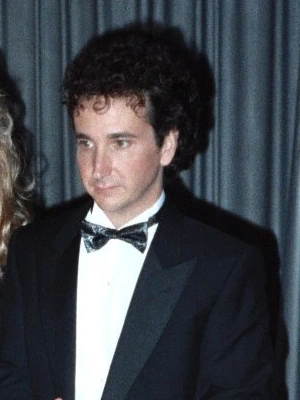
Which Mark Gruner are we actually talking about?

This is the most important question to settle first. Net-worth sites rarely tell you which version of a shared name they're profiling, and the financial gap between these candidates is enormous. Here are the four most findable Mark Gruners as of mid-2026:
- Mark Gruner the actor (born December 29, 1958): Had a brief film career in the late 1970s, including a supporting role in Jaws 2 and an appearance in the cast of Fantastic Planet. His professional activity post-1980s is not widely documented.
- Mark Gruner the CPA and CFO: Listed as Chief Financial Officer of the Jewish Federation of Ottawa and Jewish Community of Ottawa Development Foundation. His bio under Green Bridge Consulting and MarkGruner.com describes a career in finance transformation, CFO work, and chartered accounting. He studied biochemistry at McGill University before moving into public accounting.
- Mark Gruner in Acworth, Georgia: A LinkedIn profile connects this person to HP Enterprise Services and education at Indiana University's Kelley School of Business (1979-1984). Likely a career IT/enterprise services professional.
- Mark Gruner in the Netherlands: A separate LinkedIn profile based in Valkenburg aan de Geul, associated with SD Worx, a European HR and payroll services company.
If you searched 'Mark Gruner net worth' because you remember him from Jaws 2 or a late-70s film, you want the actor. If you found his name through nonprofit finance circles or Canadian accounting, you want the CFO. The numbers are not interchangeable, and no single dollar figure covers all of them.
What 'net worth' actually means (and why the numbers vary so much)
Net worth is simply total assets minus total liabilities. That sounds clean, but in practice it involves a lot of estimation. For private individuals who haven't filed public financial disclosures, sites like People AI, Celebrity Net Worth, Wealthy Gorilla, and NetWorth Spot are all making educated guesses based on career history, publicly reported salaries, visible assets like real estate, and proprietary algorithms. None of them are publishing audited balance sheets.
The methodology differences matter. NetWorth Explained explicitly uses a conservative 'at least worth this number' floor estimate rather than a midpoint or ceiling. NetWorth Spot uses publicly available data run through a proprietary algorithm it does not fully disclose. Celebrity Net Worth has faced credibility questions in press reporting and on Wikipedia, where its reliance on staff-generated estimates rather than verified financial records is noted. Wealthy Gorilla states on its fact-checking page that it sources salary, earnings, and expenditure information, but doesn't publish its actual workings for each person. The practical takeaway: treat any figure from these sites as a rough order-of-magnitude estimate, not a confirmed fact.
The $24.6 million figure: where it comes from and how much to trust it

People AI is the primary source for the $24.6 million 2026 estimate attached to the name Mark Gruner. Their profile is tied to the actor born December 29, 1958, and they publish a year-by-year series going back to at least 2022, when they pegged the figure at $14.8 million. That's a jump of roughly $10 million in four years, which is a significant upward revision. People AI doesn't publish its calculation methodology transparently enough to understand what drove that increase, which is a red flag for anyone using the number for anything beyond casual curiosity.
For context: a character actor with a few late-1970s film credits and no documented major franchise or producing career generating ongoing royalties would not typically accumulate $24 million in personal wealth through entertainment income alone. That doesn't make the figure impossible, but it does mean you'd want to see supporting evidence, such as real estate holdings, business ownership, investment accounts, or other documented assets before accepting it.
Career earnings and the wealth-building timeline
Mark Gruner the actor
The actor's documented film work clusters around the late 1970s. Jaws 2 was a major Universal Pictures release in 1978, the highest-grossing film of that year, and supporting cast members on studio productions of that scale would have received SAG scale or slightly above scale compensation. For a speaking supporting role in a major studio film in 1978, that could range from a few thousand dollars to the low tens of thousands, adjusted for the era. Residuals from a film with Jaws 2's distribution history would generate ongoing passive income, but not at a scale that alone builds multi-million dollar wealth over decades. The Fantastic Planet appearance adds to his credits but similarly does not represent a major income event. Hulu’s “Fantastic Planet” page lists Mark Gruner among the starring cast Fantastic Planet appearance. Without evidence of a continued acting career, producing credits, or other business ventures, the high end of the People AI estimate is difficult to substantiate from entertainment alone.
Mark Gruner the CFO and CPA
This Mark Gruner's career path is more traceable in professional terms, even if the financial details are less dramatic. His background includes chartered accounting and public accounting training, CFO-level roles in nonprofit and community organizations, and consulting work under the Green Bridge Consulting brand. The 2022 Form 990 for the Jewish Community of Ottawa Development Foundation lists him as CFO with compensation shown as $0 in available records, which is consistent with either a volunteer role or a role compensated through the parent federation rather than the foundation itself. Nonprofit CFO compensation in Canada for organizations of this scale typically ranges from $80,000 to $130,000 CAD annually, though without a confirmed salary figure this is contextual benchmarking, not a confirmed number. A career built on accounting, finance transformation consulting, and nonprofit leadership does not typically produce nine-figure wealth, but a well-managed career over 30-plus years with smart investing can absolutely reach seven figures.
Investments, assets, and financial milestones
No public records specifically document real estate holdings, investment portfolios, or business equity stakes for any of the Mark Gruners identified here. For the actor, the most plausible asset categories would be residuals from Jaws 2 (which has had an extended distribution life through home video and streaming), any real estate purchased during peak earning years, and standard retirement or investment accounts accumulated over time. For the CFO, the most likely wealth-building vehicles are professional earnings invested over a long career, potential equity or ownership in Green Bridge Consulting, and real estate in the Ottawa or broader Canadian market.
No SEC filings were located for any Mark Gruner in initial searches, which is consistent with these being private individuals rather than public company executives required to disclose equity stakes. That absence of public financial disclosure is itself useful information: it tells you that none of these candidates appear to be publicly listed company officers with mandatory reporting requirements, which means all net-worth figures are estimates derived from indirect signals rather than verified disclosures.
Public records, lawsuits, and major financial events
No documented lawsuits, bankruptcies, major settlements, or significant public financial events have been identified for any of the Mark Gruners in this research. This is a neutral finding, not a positive one. The absence of a lawsuit in public records doesn't confirm clean finances, and the absence of a bankruptcy doesn't mean there haven't been financial difficulties. It simply means no major public financial events were surfaced. For the actor, the Screen Actors Guild provides some protection and residual tracking infrastructure, which would make complete financial disappearance from industry payments unlikely if he maintained active membership. For the CFO, Form 990 filings are public documents and would surface any significant financial irregularities at the foundation level, and none have been flagged.
How to check the estimate yourself and keep it current

If you want to build your own best-supported estimate rather than rely on a single site's algorithm, here's a practical process you can actually follow:
- Confirm which Mark Gruner you mean first. Check IMDb for the actor, LinkedIn for the CFO or business professional, and cross-reference birth dates or locations to confirm you're tracking one person, not a composite.
- Look up Form 990 filings for any nonprofit connections. The Jewish Community of Ottawa Development Foundation's 990s are available through aggregators like Roundpaper and ProPublica's Nonprofit Explorer. These are public documents and show compensation for key officers.
- Search property records. In most Canadian provinces and US states, real estate transactions are public. Search by name in the relevant county or province registry to find property purchases, sale prices, and mortgage filings.
- Check PACER (US) or provincial court databases (Canada) for any litigation history. A name search on PACER costs a small fee but covers federal court filings comprehensively.
- Cross-reference multiple net-worth sites, but weight them by methodology. Sites that show their work (even partially) are more reliable than those that only publish a single number with no sourcing.
- For the actor specifically, check SAG-AFTRA residual records indirectly by looking at how often Jaws 2 has been licensed for streaming or cable, which drives ongoing royalty payments.
- Set a calendar reminder to re-check annually. Net worth estimates from sites like People AI shift year-to-year, sometimes dramatically, and a figure from 2024 may be meaningfully wrong by 2026.
How Mark Gruner compares to other notable Marks in this database
For context, the name 'Mark G' spans a wide financial spectrum in this database. Profiles like Mark Griffin and Mark Griffiths cover individuals whose wealth trajectories are shaped by very different industries, and the same disambiguation challenge applies to many of them. The same disambiguation problem applies when people search for Mark Griffiths net worth, because different individuals with similar names can get mixed together. Mark Green and Mark Grigsby similarly require career-specific context to make sense of any published number. The lesson across all of them is consistent: the name alone tells you nothing. The career, the industry, and the documentation trail are what actually let you build a credible estimate.
The most honest answer you're going to get
If the Mark Gruner you're researching is the actor born December 29, 1958, the best-supported public estimate sits at roughly $24. If you are specifically looking for the claim about Mark Gruner, the popular "net worth" figure is often traced back to People AI’s estimate mark j grant net worth. 6 million for 2026 per People AI, but that figure lacks transparent sourcing and the supporting career data doesn't obviously explain a number that high. A more conservative and arguably more defensible estimate based on publicly available career signals would probably land somewhere between $1 million and $5 million, accounting for residuals, savings, and modest investments over a 40-plus-year period since his most visible film work. If the Mark Gruner you're researching is the CPA and CFO in Canadian nonprofit finance, there is no credible public net-worth estimate available, and the career profile suggests a comfortable professional wealth level, likely in the low-to-mid seven figures at most, built through a long career in accounting and finance rather than any single large wealth event. If you want a contrast point, profiles like mark griffin net worth show how different industries and documentation levels can produce widely different estimates from the same kind of net-worth site methodology. Because the figures are based on different people with the same name, any claims about Mark Grimes net worth should be treated as unverified unless you can match the correct biography Mark Gruner you're researching. The same goes for the Mark Gruner whose career is in Canadian nonprofit finance, where no credible public net-worth estimate is available no credible public net-worth estimate available.
FAQ
Why do different sites show wildly different “mark gruner net worth” numbers?
Because “Mark Gruner” is not unique. Net-worth sites can attach their estimate to different people with the same name, and they use non-audited models that rely on indirect signals like career history, platform-visible assets, and proprietary assumptions about income and investing.
How can I verify which Mark Gruner a net-worth site is actually referring to?
Match at least two biography identifiers, for example date of birth plus a specific credit (like Jaws 2 for the actor), or employer plus role details (for example a CFO role tied to a specific Canadian nonprofit context). If the site does not consistently align with those identifiers, treat the number as potentially belonging to someone else.
If the actor’s estimate is around $24.6 million, what evidence would actually make that plausible?
Look for documentation that suggests wealth drivers beyond one-time acting pay, such as ownership in a business, substantial real-estate holdings in public records, credible reporting of long-term business involvement, or clear evidence of large investment accumulation. Without that, a high estimate is hard to justify from entertainment income alone.
Does a lack of SEC filings mean the Mark Gruner net worth estimate is accurate?
No. It mainly indicates none of the identified individuals appear to be public-company officers or otherwise required to make equity disclosures. Private individuals can still have significant wealth, and net-worth sites can still be wrong due to disambiguation or modeling errors.
What is the most common mistake people make when using net-worth site figures for “mark gruner net worth”?
Using the dollar amount as a confirmed fact rather than an order-of-magnitude guess. Also, people often forget to check whether the site’s Mark Gruner matches the biography they care about, which can turn a multi-million figure into a totally different person’s number.
Are People AI year-to-year increases meaningful, or just model noise?
They can be either. A large jump over a few years suggests a change in the model’s assumptions, new inferred data, or a shift in which individual was matched. Since the calculation method is not fully transparent, the safest interpretation is that the number is unstable rather than validated.
If I want a better estimate than any single site, what should my next step be?
Build your own range using asset categories that actually fit the person’s career, then sanity-check against typical earnings and investing realities. For the actor, focus on residual plausibility and any documented assets; for the finance professional, focus on long-run salary plus potential consulting equity and any publicly supportable asset indicators.
How should I interpret claims like “conservative floor” versus “algorithmic midpoint” on different net-worth sites?
Treat “at least” figures as minimum-style guesses that may still be far from reality, and treat “proprietary algorithm” outputs as model-based estimates without verifiable balance sheets. Neither type should be treated as confirmed, but a floor estimate can sometimes be more cautious about overstatement.
Why does the article mention that Mark Gruner’s compensation in a Form 990 can be shown as $0?
Because nonprofit reporting formats can show $0 when compensation is handled through another entity, the role is effectively volunteer, or the compensation is not directly paid by that specific organization. A $0 figure affects how you interpret income, but it does not automatically mean there is no professional earnings elsewhere.
Is it possible the actor and the Canadian nonprofit finance Mark Gruner have been merged incorrectly in net-worth databases?
Yes, and that risk is exactly why disambiguation matters. If a site uses sparse biographical fields, it can mix education, roles, or location signals, leading to an estimate that reflects neither person correctly. Always verify identity using multiple specific anchors.
Next Article
Mark Green Net Worth: How to Identify the Right Person
Disambiguate Mark Green, then get sourced net worth snapshots with income streams, drivers, and how estimates update